When I left off last month, I had just talked to a friend who recommended I take another class to see where it took my writing.
I am so glad I listened!
On her advice, I inquired at AllWriters' Workplace and Workshop about their Wendesday workshop. AllWriters is a writing studio in downtown Waukesha, Wisconsin that caters to all writing styles. The director, Kathie Giorgio, said I was welcome to "audit" a session on a Wednesday night, so I took her up on the deal.
Let me say that I was incredibly apprehensive going into the room. I hadn't written much at all formally, so was sure I'd be the greenest writer in the place. Well, I was greeted with warmth and acceptance. The writing levels were all over the map - from novice to polished and published. There were poets, musician/writers and a few people looking for a way to tap something inside them. I shared a bit of what I'd scribbled in my notebook with the group and it was well received. By the end of class, I knew this was exactly where I should be.
I enrolled in the class that week seven years ago and have been enrolled on and off ever since. It was one of the best decisions I could have made. At class we bring in up to 10 pages of double-spaced writing and read it before the group. When we're done, the group of 8-12 people critique it. The critiques are intended to be positive and supportive. We're hard on each other but in a supportive way. We push each other because we want the best from one another. In the process of it all, we laugh and laugh. It is a fun group.
As a writer, I cannot say enough about how important it is to have a good critique group. It is the single most important thing you can do with your writing. I've found it's easy to think your writing is beautiful and perfect, only to bring it to group and have it humbly put in its place. It only serves to make me a better writer though, so I take it for what it is.
Next month, I'll talk more about this studio and some of the success it has helped me achieve.

Welcome to SUNDOWN PRESS (SP), a publishing company devoted to publishing fiction and non-fiction works of all lengths!
Wednesday, January 6, 2016

Tuesday, December 29, 2015
Christmas During the Civil War
I found this post from the Civil War Trust which
does a much better job than I ever could
in describing what Christmas meant for those with loved ones serving in the
Civil War armies.

Christmas in Camp, Illustration by Thomas Nast for Harper's Weekly
It can be difficult to relate to the men and women of the Civil War era. Despite the extraordinarily different circumstances in which they found themselves, however, we can connect with our forebears in traditions such as the celebration of Christmas. By the mid-19th century, most of today’s familiar Christmas trappings – Christmas carols, gift-giving, and tree decoration – were already in place. Charles Dickens had published “A Christmas Carol” in 1843 and indeed, the Civil War saw the first introductions to the modern image of a jolly and portly Santa Clause through the drawings of Thomas Nast, a German-speaking immigrant.
Civil War soldiers in camp and their families at home drew comfort from
the same sorts of traditions that characterize Christmas today. Alfred Bellard of the 5th New
Jersey noted, “In order to make it look much like Christmas as possible, a
small tree was stuck up in front of our tent, decked off with hard tack and
pork, in lieu of cakes and oranges, etc.”
John Haley, of the 17th Maine, wrote in his diary on
Christmas Eve that, “It is rumored that there are sundry boxes and mysterious
parcels over at Stoneman’s Station directed us.
We retire to sleep with feelings akin to those of children expecting
Santa Claus.”
In one amusing anecdote, a Confederate prisoner
relates how the realities of war intruded in his Christmas celebrations: “A friend had sent me in a package a bottle of
old brandy. On Christmas morning, I
quietly called several comrades up to my bunk to taste the precious fluid of .
. . DISAPPOINTMENT! The bottle had been
opened outside, the brady taken and replaced with water . . . and sent in. I hope the yankee who played that practical
joke lived to repent it and was shot before the war ended.”
For many, the holiday was a reminder of the profound
melancholy that had settled over the entire nation. Southern parents warned their children that
Santa might not make it through the blockade, and soldiers in bleak winter
quarters were reminded, more accurately than ever, of the domestic bliss they
had left behind. Robert Gould Shaw, who
would later earn glory as the commander of the 54th Massachusettes,
recorded in his diary, “It is Christmas morning and I hope qa happy and merry
one for you all, though it looks so stormy for our poor country, one can hardly
be in a merry humor.” On the Confederate
home front, Sallie Brock Putnam of Richmond echoed Shaw’s sentiment: “Never
before had so sad a Christmas dawned upon us . . . We had neither the heart nor
inclination to make the week merry with joyousness when such a sad calamity
hovered over us.” For the people of
Fredericksburg, Virginia, which has been battered only a matter of days before
Christmas, or Savannah, Georgia, which General Sherman had presented to President
Lincoln as a gift, the holiday season brought the war to their very doorsteps.

Christmas during the Civil war served both as an
escape from and a reminder of the awful conflict rending the country in
two. Soldiers looked forward to a day of
rest and relative relaxation, but had their moods tempered by the thought of
separateion from their loved ones. At
home, families did their best to celebrate the holiday, but wondered when the
vacant chair would again be filled.
In spite of the 150 years which separates us from them, I can say from experience on both sides that these feelings seem to be universal for families separated by war, applicable as much now as they were then.

Sean Kevin Gabhann

Tuesday, December 8, 2015
THE KNIGHT BEHIND THE ROUND TABLE -- #NewRelease
Le Morte D'Arthur
Sir Thomas Malory 1485
I have been fascinated by the tales of King Arthur and his Knights of the Round Table all my life. There are several versions of the tales, but the most complete is the collection that were drawn together in the fifteenth century by a fascinating fellow called Sir Thomas Malory, when he effectively wrote the first English novel Le Morte D'Arthur. It has the distinction of being one of the first texts to roll off William Caxton's printing press in 1485.

There is a magic about the whole King Arthur saga. The sword in the stone, the great wizard Merlin, the ideal of Camelot, chivalry, the Order of the Round Table and the quest for the Holy Grail, then add the tale of forbidden love between Queen Guinevere and Sir Lancelot, sprinkle it with human frailties, betrayal, and countless battles, duels, a monster or two and you have the timeless work of genius that is the legend of King Arthur and the Knights of the Round Table.
It is the blueprint for all of those great fantasies that have followed it. The Lord of the Rings, Game of Thrones, even the Harry Potter saga. And Camelot, of course, was associated with the late President JF Kennedy. Shortly after his state funeral, his widow, Jacqueline Kennedy gave an interview to Theodore White, a journalist, for an article to be featured in Life magazine. She compared her husband's presidency with the Camelot of King Arthur. It was a time of hope, when men were gallant, great deeds were done and when the White House was a place graced by writers, poets and artists. Her husband was a heroic figure, like a knight of old.
I have always been fascinated by the writer of that great book Le Morte D'Arthur, Sir Thomas Malory. But actually, surprisingly little is known about him. We have no contemporary portrait, no personal effects, no artefacts. His memory is enshrined in his great work of 300,000 words.
There were six men of that name in the fifteenth century who are all contenders, but opinion favours Sir Thomas Malory of Newbold Revel, a manor near Coventry in Warwickshire. I personally like to think that is him, for it is not far from the home of that other giant of literature, William Shakespeare.
Sir Thomas was not a knight errant as he loved to depict his knights of the Round Table. He had a darker side and was imprisoned for a series of crimes ranging from attempted murder to theft and possibly even abduction.
On the other hand we know that he had been a Member of Parliament, a soldier and an adventurer. It was during his spells of imprisonment that he showed himself to be the literary genius that gave us King Arthur and the Knights of the Round Table.
It is recorded that he was a man of singular martial prowess, for he broke out of prison on two occasions. Once, on July 27, 1451 he escaped and swam across the moat at Coleshill prison. On another occasion he broke out of Colchester by using great skill with a variety of weapons, including dagger, sword and langurs-de-boeuf, a type of halberd so named because it had a spiked head the shape of an ox-tongue.
Mystery and romance surround Sir Thomas Malory and he has intruded into my unconscious writer's mind several times and in several books. In my first western Raw Deal at Pasco Springs he incarnated as Tom Mallory, a gambler, one time lawman and adventurer. He again knocked on the door of my imagination and came in as the protagonist of The Apothecary's Quest, a medieval single due out on December 8 as an ebook.

The Apothecary’s Quest:
An Adventure of the Order of the Black Rose
ABOUT:
Apothecary Thomas Smythe has been betrayed by a fellow knight in the Order of the Hospitallers in a foreign war. Home in England once more, Thomas lives out his life as a simple apothecary. When he is summoned to attend Sir Percival Fitzroy, who has been taken ill, Thomas realizes that Lord Fitzroy has been poisoned.
A trap, set in motion by a craven knight from Thomas’s past, threatens to see him murdered, as well. But can he reach Sir Richard de Vere, a man he suspects may hold the key to the mysterious death of Lord Fitzroy—and will Sir Richard help him? For Lord Fitzroy has entrusted Thomas with a quest for the Order of the Black Rose, a secret society that could accept him as one of their own…or have him slain.
Thomas is still a knight, at heart—and there is only one honorable thing to do, no matter the cost to himself…
EXTRACT:
1
THE APOTHECARY
Newbold Revel, Warwickshire, England
June 1320
“Bless
you, Master Smythe! Bless you, sir,” said the woman as she dropped three
pennies into his hand before she picked up the small flask of medicine and pot
of balsam that he had prepared for her while she waited.
“You are welcome, Mistress Burke,” Thomas
Smythe replied with a smile as he deposited the money in the leather purse that
hung from his waist. “That balsam has the finest herbs plucked from the hedgerows
around Newbold Revel by myself under the full moon last Sunday. They are
infused with its healing power and will soothe the scrofulous rash that your
mother suffers from.”
“That it has already, sir. That
first pot almost cleared those horrid blisters on her face and I am sure that
this pot will take care of the rest.”
She stood and pursed her lips as she
turned her attention to the small flask of liquid in her hand. “But it is this
wonderful medicine that I am most pleased with, Master Smythe.” She suddenly
looked over her shoulder to make sure that no one else had sneaked into the
shop behind her. She shoved back in place a stray lock of hair that had escaped
from her cotton cap and leaned slightly forward to talk in hushed tones.
“It is a marvel, sir. It has given
my husband his manhood back and made him most frolicsome. I have great hopes
that before too long we may be blessed with a child of our very own after these
five years of marriage, when everyone was thinking that I was barren. And it
will be all thanks to your medicine, sir.”
Without warning, she shot an arm out
and hooked it round his neck, pulling him down towards her so that she could
plant a kiss on his bearded cheek.
Thomas immediately straightened and
took a pace backwards. Mistress Blake sighed and shrugged her shoulders
demurely.
“I am sorry if I embarrassed you,
but I just had to thank you, sir. You are the best apothecary we ever had, you
see. Far better than that old faker who almost drowned when they gave him a
ducking in the River Avon last summer.”
Thomas winced at the thought. He had, of course, heard about his unfortunate
predecessor’s fate when he first arrived in Newbold Revel, but from all he had
heard he thought it most likely that the old man actually had indeed been a
charlatan, a rogue who merely professed to having a knowledge of physic when in
actuality he had none.
Thomas, on the other hand, knew that his
treatment would have been of some help in calming her husband’s fears, and that
nature and her own womanly wiles would have done the rest. The truth was that
Mistress Mary Burke was a comely young woman, whom many a man would have been
proud to share a home and a bed with, yet for some reason her husband had been
unable to perform his husbandly duties. As a result, her family and neighbors
had thought her barren and unable to produce a child; she had thought herself
undesirable and became racked with guilt; and her husband had spent too much
time in the taverns of Newbold Revel, supping ale and making the problem
tenfold worse.
Hence she had come to Thomas Smythe
the local apothecary for what she thought was a love potion. It was in fact an
extract of pine together with dried and pulverized bullock’s testicles, an
extremely useful remedy for making a man’s nether regions congest with blood.
He stroked his thick black beard as he
took another backward step from her, for he was ever conscious that many years
previously he had taken a vow.
“I fear my profession is almost as
dangerous as that of a soldier’s,” he said with a rueful smile. “I would not
welcome a turn in the town ducking stool.”
“You’ll never be in any danger, Master
Smythe. Anyone can tell that you have a kindness and a goodness about you that
marks you out as a healer. We need you to make medicines for us. Let others
more suited to warfare be soldiers.”
When she had gone Thomas stood for a
moment rubbing his cheek, which felt as if it was glowing after the touch of
her lips. It was a feeling that he remembered from his youth, when he had
enjoyed the lifestyle of his rank and reveled in the company of the fairer sex.
Yet all that had been before he had gained his spurs and taken his vows.
Half
memories threatened to burst forth from where he had long ago suppressed them
and he shrugged them away as he usually did by beating his fist against his
left shoulder, where he bore an old sword wound........
Keith Souter is a part time doctor, medical journalist and novelist. He writes westerns as Clay More and crime as Keith Moray. He is the current vice-president of Western Fictioneers. His latest book The Doctor's Bag has just been published by Sundown Press.
Be sure to leave a comment to be entered into a free giveaway!
Keith Souter is a part time doctor, medical journalist and novelist. He writes westerns as Clay More and crime as Keith Moray. He is the current vice-president of Western Fictioneers. His latest book The Doctor's Bag has just been published by Sundown Press.
***
Be sure to leave a comment to be entered into a free giveaway!
BUY LINKS Barnes and Noble Smashwords Kobo
Tuesday, December 1, 2015
#NewRelease -- Memories From Maple Street U.S.A: The Best Christmas Ever -- #Giveaway

Who can forget those special Santa gifts that brought such joy to us in our childhood? Those toys we fervently hoped ol’ Santa would bring for us if we were good? Livia J. Washburn, Cheryl Pierson, and Tanya Hanson write about some of those hopes and dreams for that certain gift with a special, personal twist to each story.
But Christmas memories also sometimes hold a special place in our hearts because of a person that was somehow important in our lives. Authors Sharon Cunningham, Beverly Wells, Carol Huff and Gigi Meyer weave that aspect of Christmas into their beautiful holiday tales, with remembrances of some very special people in their lives—and why Christmas means so much because of them.
Kathleen Rice Adams pens a sentimental story of a wonderful gift to her mother from her father. And Charlie Steel’s story of hunting for the perfect Christmas tree with his father is sure to make you smile. Jim Landwehr, Tina Holt, and Randy Lee Eickhoff all give us a backward glance at the love and traditions from the past that make Christmas what it is, while Christine Waldman tells a poignant tale of Santa looking for his lost reindeer in the snow.
This is one wonderful collection of heartfelt stories that you will not want to pass up—and it also makes a great gift for all ages—if you still believe in Santa!
Tell us about your favorite Christmas memory. We'll be giving away a free ecopy to one lucky person who comments.
Sunday, November 29, 2015
In Search of an Outlet
Well November flew by and it's time again for my monthly guest post.
When I left off, I mentioned that I knew early on in life that I liked to write. I mentioned that my wife and I became sort of pen-pals before we met and through our writing got to know each other at a deeper level. For years people told me that they loved my letters and those comments always resonated with me that I probably have a knack for writing. But between the demands of trying to build a career and later, the rigors of fatherhood, it seemed I never had time, nor knew what to write even if I did. I did a little personal journalling, but nothing I'd ever want anyone to see.
One of the cooler things to come out of this time in the writing wilderness, were my "kid journals." When our first child was born, a friend gave us a blank journal and she recommended I journal about our kids' lives. I took the task seriously, so made journal entries after significant life events or emotionally memorable moments.
Three years later, when Ben was born, we bought one to track his life too and I have added to that over the years as well. The plan is to give them to them after they graduate from college. I've often said that, regardless of what else I publish or write, these are my two most important books. It's interesting to go back through some of the entries and read what we were going through at the time. Fatherhood was filled with such joy and trial.
After floundering around for years, not knowing how to tap into this love for writing, I finally enrolled in a class offered through the City of Waukesha continuing education program in 2005. It was titled Writing from your Life and it focused on writing memoir and creative nonfiction. We were encouraged to write stories from our past, so I started a couple of short stories about camping and fishing with my brothers. Little did I know these stories would form the groundwork for my book Dirty Shirt, which would be published nine years later.
I'd like to say that class broke my cycle of writing inactivity and everything came easy after that. Unfortunately, that wasn't the case at all. I didn't follow the class up with anything immediate, and eventually fell away from writing entirely, except for journalling. After all, I thought, who wanted to hear stories from my past anyway? There was certainly no market for it, of that I was certain.
At the same time, I couldn't silence the praises people had given me that rolled around in my head. After a year away, I finally contacted my writing instructor and asked her what she thought I should do. She asked me what I wanted from my writing. By the time I'd hung up with her we determined that I should probably take a class somewhere and see where it leads.
Next month I'll talk about how that call, and the action that came out of it, changed my life as a writer forever.
See you next month!
When I left off, I mentioned that I knew early on in life that I liked to write. I mentioned that my wife and I became sort of pen-pals before we met and through our writing got to know each other at a deeper level. For years people told me that they loved my letters and those comments always resonated with me that I probably have a knack for writing. But between the demands of trying to build a career and later, the rigors of fatherhood, it seemed I never had time, nor knew what to write even if I did. I did a little personal journalling, but nothing I'd ever want anyone to see.
One of the cooler things to come out of this time in the writing wilderness, were my "kid journals." When our first child was born, a friend gave us a blank journal and she recommended I journal about our kids' lives. I took the task seriously, so made journal entries after significant life events or emotionally memorable moments.
Three years later, when Ben was born, we bought one to track his life too and I have added to that over the years as well. The plan is to give them to them after they graduate from college. I've often said that, regardless of what else I publish or write, these are my two most important books. It's interesting to go back through some of the entries and read what we were going through at the time. Fatherhood was filled with such joy and trial.
After floundering around for years, not knowing how to tap into this love for writing, I finally enrolled in a class offered through the City of Waukesha continuing education program in 2005. It was titled Writing from your Life and it focused on writing memoir and creative nonfiction. We were encouraged to write stories from our past, so I started a couple of short stories about camping and fishing with my brothers. Little did I know these stories would form the groundwork for my book Dirty Shirt, which would be published nine years later.
I'd like to say that class broke my cycle of writing inactivity and everything came easy after that. Unfortunately, that wasn't the case at all. I didn't follow the class up with anything immediate, and eventually fell away from writing entirely, except for journalling. After all, I thought, who wanted to hear stories from my past anyway? There was certainly no market for it, of that I was certain.
At the same time, I couldn't silence the praises people had given me that rolled around in my head. After a year away, I finally contacted my writing instructor and asked her what she thought I should do. She asked me what I wanted from my writing. By the time I'd hung up with her we determined that I should probably take a class somewhere and see where it leads.
Next month I'll talk about how that call, and the action that came out of it, changed my life as a writer forever.
See you next month!
Thursday, November 26, 2015
The First Iowa Volunteer Mounted Infantry
 When preparing the back-story for the characters in the Shiloh Trilogy, I found that I needed to identify a particular fictional Union regiment as the home for Jamie Harper, Josuah Featherstone, Gus Magnusson, Johnny Cooke, and the others. I wanted to identify a unit which could plausibly have participated in most of Grant’s and Sherman’s major battles not only in the time period covered by the Trilogy, but extending from the earliest battles to the end of major operations in April 1865.
I had the particular good fortune to have chosen Sergeant’s Bluff, Iowa as Harper’s home town. Using the constraint that Harper would have to join a unit from a state near his home town, this gave me the choice of Iowa, the states of Minnesota and Missouri, and the territories of Nebraska or Dakota.
Of these, Iowa proved to be the best historical choice having provided regiments for nearly all of the major battles in the western theater, from the First Iowa Volunteer Infantry at Wilson’s Creek, to the sixteen regiments of Iowans in the final battle for Sherman’s armies at Bentonville. In particular, I wanted a unit which could plausibly have participated in the four battles described in the Trilogy: Belmont, Fort Henry, Fort Donelson, and Shiloh.
 Using Wikipedia as a quick reference source, I discovered that there were just five Union regiments present at Belmont, four from Illinois and the Seventh Iowa Volunteer Infantry. For a cross-check, I consulted the Regimental Index of The Civil War Archive website operated by Mike Northway. Based on their regimental history, it seemed that the Seventh Iowa would serve quite well is a means for validating the feasibility of an Iowa unit participating in most of Grant’s and Sherman’s major battles. Back to Wikipedia and a check of the Union orders-of-battle for the other battles confirmed this.
So, I now knew it was feasible. But I didn’t want to use the actual Seventh Iowa because I didn’t wish to trivialize the accomplishments of the men who served in that regiment nor did I wish to be constrained by that unit’s known, recorded history and personages. I also knew that I want at some time in the future to write a prequel which covers the campaign in Missouri during 1861. So, I looked at the Union order-of-battle of Wilson’s Creek and discovered the First Iowa Volunteer Infantry, a ninety-day unit, whose only major battle was Wilson’s Creek – ten days prior to the unit being mustered out of service in August 1861.
I had my fictional unit. What if, instead of returning to Iowa, a number of the veterans of the First Iowa re-enlisted for three years and they are permitted to retain their unit lineage? Some of the officers would need to be changed and I still wanted to avoid using real soldiers' names.

The story of Jamie Harper and the others begins with Harper's Donelson which was published in September 2015.

- Harper's Donelson: A Novel of Grant's First Campaign
Tuesday, November 3, 2015
A Prairie Rose Companion
Greetings from the northern prairies of Wisconsin, the land of cheese,
bratwurst and beer! My name is Jim Landwehr and this is my first guest blog post
for Prairie Rose Publications. When the call was put out to Prairie Sun authors
I was excited to be considered and eventually chosen as a participant. I’ve
been blogging for about nine years, and have really come to enjoy the feedback
I’m getting from followers. My blog is not topical, but rather jumps from
subject to subject. I describe it as the noise that’s in my head, which is more
truth than fiction.
If you want to check it out, go to: www.writerjimlandwehr.com
The focus for my posts to the Prairie Rose blog will be my
writing journey. I’ll talk about the people, processes and events that brought
me to where I am; a published author of two books and contributions to several
magazines, journals and anthologies. My most recent successes were with Sundown
Press, an imprint of Prairie Rose Publications. I’ll also try and highlight what
I’ve learned along the way and point out some of the challenges I’ve faced.
 Because this is my first post, I’ll start by telling you a
little about myself. I was born and raised in St. Paul, Minnesota. After my father was murdered in 1967, my mother was left to raise six of us on her own for many
years until she remarried. Those single parent years, and the house I grew up in
during the seventies, are the source of my next memoir, an as-yet untitled work
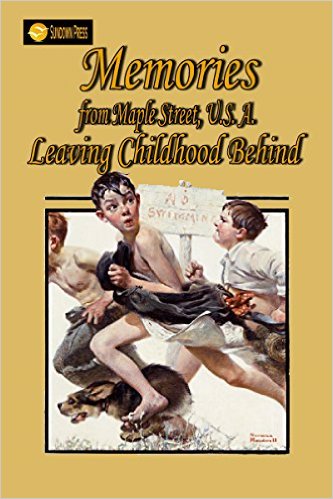
in progress. They are also the source of two of my entries in the Memories From Maple Street, USA
anthologies being offered on Sundown Press. (Leaving Childhood Behind and The
Best Christmas Ever.)
Because this is my first post, I’ll start by telling you a
little about myself. I was born and raised in St. Paul, Minnesota. After my father was murdered in 1967, my mother was left to raise six of us on her own for many
years until she remarried. Those single parent years, and the house I grew up in
during the seventies, are the source of my next memoir, an as-yet untitled work
in progress. They are also the source of two of my entries in the Memories From Maple Street, USA
anthologies being offered on Sundown Press. (Leaving Childhood Behind and The
Best Christmas Ever.)
I first realized that I loved to write in fourth grade. I
used to make short story booklets out of half sheets of paper. Most of the
stories were about adventure or disaster, and, for some reason, all of them had
a moral. I remember Sister Patricia noticing that I was writing these on my own
time and asking if I would mind sharing them in a shared classroom special
projects drawer? To me, it was no big deal, but it was really then that I
realized that not everyone liked writing as much as me.
My love for writing actually led me to my wife, in a roundabout
fashion. When I first moved to Wisconsin in 1985, I was writing letters to my
brother Rob, a student at the National Technical Institute for the Deaf in
Rochester, New York. As a joke, he told four of his female friends to write me
a letter. They did and he included all four of them in one of his letters to
me. I replied to all of the young ladies, and only one kept writing back. We
got to be pen pals and after a year and a half of writing, Donna paid a visit
to Milwaukee. We spent the weekend together, fell in love and, well, the rest
is history. We celebrated 25 years together last June.
We have two children, Sarah (20) and Ben (17) who are the
source of all my pride and joy. We also have a dog Toby, a cairn terrier who is
as stubborn as an old man, and two cats Chester and Isabelle. Unlike my
children, these animals are the source of all my carpet and furniture
ruination.
 |
| Toby at 12 Weeks. |
So that is a bit about me and my story. In my next post I
hope to share more as well as talk about how I began to take my writing
seriously.
Thank you so much for following me. If you’d like more
information about my writing, it is all on my Author page at: www.jimlandwehr.com
See ya next month!
Subscribe to:
Posts (Atom)