Search This Blog

Tuesday, December 1, 2015

#NewRelease -- Memories From Maple Street U.S.A: The Best Christmas Ever -- #Giveaway

What is Christmas all about? Wonderful memories! This collection of stories celebrates the very best and most poignant memories of the past, and is sure to have you laughing and crying right along with the authors who shared their stories in MEMORIES FROM MAPLE STREET, U.S.A.—THE BEST CHRISTMAS EVER! 

Who can forget those special Santa gifts that brought such joy to us in our childhood? Those toys we fervently hoped ol’ Santa would bring for us if we were good? Livia J. Washburn, Cheryl Pierson, and Tanya Hanson write about some of those hopes and dreams for that certain gift with a special, personal twist to each story. 

But Christmas memories also sometimes hold a special place in our hearts because of a person that was somehow important in our lives. Authors Sharon Cunningham, Beverly Wells, Carol Huff and Gigi Meyer weave that aspect of Christmas into their beautiful holiday tales, with remembrances of some very special people in their lives—and why Christmas means so much because of them. 

Kathleen Rice Adams pens a sentimental story of a wonderful gift to her mother from her father. And Charlie Steel’s story of hunting for the perfect Christmas tree with his father is sure to make you smile. Jim Landwehr, Tina Holt, and Randy Lee Eickhoff all give us a backward glance at the love and traditions from the past that make Christmas what it is, while Christine Waldman tells a poignant tale of Santa looking for his lost reindeer in the snow. 

This is one wonderful collection of heartfelt stories that you will not want to pass up—and it also makes a great gift for all ages—if you still believe in Santa!

Tell us about your favorite Christmas memory.  We'll be giving away a free ecopy to one lucky person who comments.


Buy Links   Barnes and Noble    Smashwords    Kobo    iBooks


Sunday, November 29, 2015

In Search of an Outlet

Well November flew by and it's time again for my monthly guest post.

When I left off, I mentioned that I knew early on in life that I liked to write. I mentioned that my wife and I became sort of pen-pals before we met and through our writing got to know each other at a deeper level. For years people told me that they loved my letters and those comments always resonated with me that I probably have a knack for writing. But between the demands of trying to build a career and later, the rigors of fatherhood, it seemed I never had time, nor knew what to write even if I did. I did a little personal journalling, but nothing I'd ever want anyone to see.

One of the cooler things to come out of this time in the writing wilderness, were my "kid journals." When our first child was born, a friend gave us a blank journal and she recommended I journal about our kids' lives. I took the task seriously, so made journal entries after significant life events or emotionally memorable moments.

Three years later, when Ben was born, we bought one to track his life too and I have added to that over the years as well. The plan is to give them to them after they graduate from college. I've often said that, regardless of what else I publish or write, these are my two most important books. It's interesting to go back through some of the entries and read what we were going through at the time. Fatherhood was filled with such joy and trial.

After floundering around for years, not knowing how to tap into this love for writing, I finally enrolled in a class offered through the City of Waukesha continuing education program in 2005. It was titled Writing from your Life and it focused on writing memoir and creative nonfiction. We were encouraged to write stories from our past, so I started a couple of short stories about camping and fishing with my brothers. Little did I know these stories would form the groundwork for my book Dirty Shirt, which would be published nine years later.

I'd like to say that class broke my cycle of writing inactivity and everything came easy after that. Unfortunately, that wasn't the case at all. I didn't follow the class up with anything immediate, and eventually fell away from writing entirely, except for journalling. After all, I thought, who wanted to hear stories from my past anyway? There was certainly no market for it, of that I was certain.

At the same time, I couldn't silence the praises people had given me that rolled around in my head. After a year away, I finally contacted my writing instructor and asked her what she thought I should do. She asked me what I wanted from my writing. By the time I'd hung up with her we determined that I should probably take a class somewhere and see where it leads.

Next month I'll talk about how that call, and the action that came out of it, changed my life as a writer forever.

See you next month!

Thursday, November 26, 2015

The First Iowa Volunteer Mounted Infantry

Social Media Head Shot Sean K. Gabhann 20150329When preparing the back-story for the characters in the Shiloh Trilogy, I found that I needed to identify a particular fictional Union regiment as the home for Jamie Harper, Josuah Featherstone, Gus Magnusson, Johnny Cooke, and the others.  I wanted to identify a unit which could plausibly have participated in most of Grant’s and Sherman’s major battles not only in the time period covered by the Trilogy, but extending from the earliest battles to the end of major operations in April 1865.
I had the particular good fortune to have chosen Sergeant’s Bluff, Iowa as Harper’s home town.  Using the constraint that Harper would have to join a unit from a state near his home town, this gave me the choice of Iowa, the states of Minnesota and Missouri, and the territories of Nebraska or Dakota.
Of these, Iowa proved to be the best historical choice having provided regiments for nearly all of the major battles in the western theater, from the First Iowa Volunteer Infantry at Wilson’s Creek, to the sixteen regiments of Iowans in the final battle for Sherman’s armies at Bentonville.   In particular, I wanted a unit which could plausibly have participated in the four battles described in the Trilogy: Belmont, Fort Henry, Fort Donelson, and Shiloh.

The Civil War Archive TitleUsing Wikipedia as a quick reference source, I discovered that there were just five Union regiments present at Belmont, four from Illinois and the Seventh Iowa Volunteer Infantry.  For a cross-check, I consulted the Regimental Index of The Civil War Archive website operated by Mike Northway.  Based on their regimental history, it seemed that the Seventh Iowa would serve quite well is a means for validating the feasibility of an Iowa unit participating in most of Grant’s and Sherman’s major battles.  Back to Wikipedia and a check of the Union orders-of-battle for the other battles confirmed this.

So, I now knew it was feasible.  But I didn’t want to use the actual Seventh Iowa because I didn’t wish to trivialize the accomplishments of the men who served in that regiment nor did I wish to be constrained by that unit’s known, recorded history and personages.   I also knew that I want at some time in the future to write a prequel which covers the campaign in Missouri during 1861.  So, I looked at the Union order-of-battle of Wilson’s Creek and discovered the First Iowa Volunteer Infantry, a ninety-day unit, whose only major battle was Wilson’s Creek – ten days prior to the unit being mustered out of service in August 1861.

I had my fictional unit.  What if, instead of returning to Iowa, a number of the veterans of the First Iowa re-enlisted for three years and they are permitted to retain their unit lineage?  Some of the officers would need to be changed and I still wanted to avoid using real soldiers' names.

Iowa Genealogy Project Logo
During an internet search, I had the great good fortune to find the Iowa Genealogy Web Project.  In these pages, I found the initial muster rosters for every Iowa unit in the Civil War, provided by Guy Logan.  Now I also had access to thousands of authentic soldiers’ names which I could (and would) manipulate to fill out the roster of fictional Iowans in Harper’s War Stories.


The story of Jamie Harper and the others begins with Harper's Donelson which was published in September 2015.


Harpers Donelson Front Page for Web 20150901
Harper's Donelson: A Novel of Grant's First Campaign
 

Tuesday, November 3, 2015

A Prairie Rose Companion

Greetings from the northern prairies of Wisconsin, the land of cheese, bratwurst and beer! My name is Jim Landwehr and this is my first guest blog post for Prairie Rose Publications. When the call was put out to Prairie Sun authors I was excited to be considered and eventually chosen as a participant. I’ve been blogging for about nine years, and have really come to enjoy the feedback I’m getting from followers. My blog is not topical, but rather jumps from subject to subject. I describe it as the noise that’s in my head, which is more truth than fiction.

If you want to check it out, go to: www.writerjimlandwehr.com

The focus for my posts to the Prairie Rose blog will be my writing journey. I’ll talk about the people, processes and events that brought me to where I am; a published author of two books and contributions to several magazines, journals and anthologies. My most recent successes were with Sundown Press, an imprint of Prairie Rose Publications. I’ll also try and highlight what I’ve learned along the way and point out some of the challenges I’ve faced.

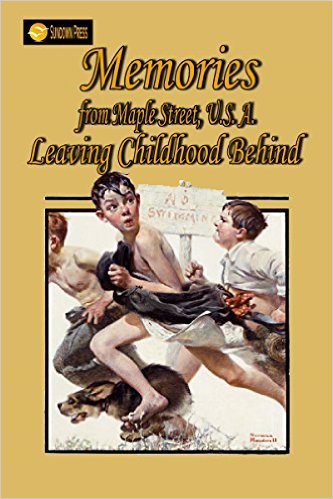
Because this is my first post, I’ll start by telling you a little about myself. I was born and raised in St. Paul, Minnesota. After my father was murdered in 1967, my mother was left to raise six of us on her own for many years until she remarried. Those single parent years, and the house I grew up in during the seventies, are the source of my next memoir, an as-yet untitled work in progress. They are also the source of two of my entries in the Memories From Maple Street, USA anthologies being offered on Sundown Press. (Leaving Childhood Behind and The Best Christmas Ever.)

I first realized that I loved to write in fourth grade. I used to make short story booklets out of half sheets of paper. Most of the stories were about adventure or disaster, and, for some reason, all of them had a moral. I remember Sister Patricia noticing that I was writing these on my own time and asking if I would mind sharing them in a shared classroom special projects drawer? To me, it was no big deal, but it was really then that I realized that not everyone liked writing as much as me.

My love for writing actually led me to my wife, in a roundabout fashion. When I first moved to Wisconsin in 1985, I was writing letters to my brother Rob, a student at the National Technical Institute for the Deaf in Rochester, New York. As a joke, he told four of his female friends to write me a letter. They did and he included all four of them in one of his letters to me. I replied to all of the young ladies, and only one kept writing back. We got to be pen pals and after a year and a half of writing, Donna paid a visit to Milwaukee. We spent the weekend together, fell in love and, well, the rest is history. We celebrated 25 years together last June.

We have two children, Sarah (20) and Ben (17) who are the source of all my pride and joy. We also have a dog Toby, a cairn terrier who is as stubborn as an old man, and two cats Chester and Isabelle. Unlike my children, these animals are the source of all my carpet and furniture ruination.
Toby at 12 Weeks.

So that is a bit about me and my story. In my next post I hope to share more as well as talk about how I began to take my writing seriously.

Thank you so much for following me. If you’d like more information about my writing, it is all on my Author page at: www.jimlandwehr.com


See ya next month!

Thursday, October 22, 2015

On Confederates, Conquistadors, Crusaders, Carolingians, and Centurions


Christopher Columbus

As an amateur historian, I sometimes find it disingenuous to ascribe labels of "good" and "evil" to the motivations of people in the past, especially to demonize the heroes of those eras in order to promote political agendas of the present.  

For example, in my novel Harper's Donelson, Lieutenant Jamie Harper fights to restore the Union and is, at best, neutral towards the issue of slavery and a member of Bedford Forrest's staff quotes from the Bible as the justification for slavery.  In the same vein, Katie Malloy is a teen-aged prostitute who, we learn, would rather commit suicide than be forced to lay with a mulatto.  Are these views to be held against them by a modern reader?  I think not. 

Slavery has been part of the human condition since before civilization began and is still with us. The common morality in the United States in the middle of the nineteenth century, the era of Manifest Destiny, justified slavery under the belief that all non-whites were inferior species and not alternate races of the same species. Some religious denominations actually preached this belief from the pulpit. How can we expect the common man of the era to believe differently?

Yes, it is true that there were abolitionists who violently opposed  these views, but they were a minority.  Neither Jamie Harper or Katie Malloy pay attention to the politics of the abolitionists.  They are focused on the travails of their own lives.

So, are Jamie and Katie good or evil?  I believe they are an accurate representation of the values of that age.  They are people of their time.  I won't condemn them for not caring about the evils of slavery based on our twenty-first century values .  They don't live in my century.

The people of the past lived under different belief systems than we do in the present. I find it difficult to believe than most modern persons would behave any differently than they, had they lived among popular ideologies of the past.
 
Sean Gabhann

 
What are your thoughts?


Harper's Donelson is available from Amazon, Barnes and Nobel e-store, Smashwords, and Kobo.


Sean Kevin Gabhann is a Vietnam-era combat veteran of the US Navy.  He first became interested in American Civil War history during the centennial celebration and he owns an extensive library of primary and secondary material related to Civil War.  He especially wants to write about campaigns in the West because of a fascination with the careers of U.S Grant and W.T. Sherman.  Gabhann lives in San Diego, California with his wife, four sons, two daughters-in-law, three grandsons, three dogs and a cat named Pepper who sometimes thinks she’s a dog. 


Saturday, October 17, 2015

PROTECT YOURSELF AGAINST ANACHRONISMITIS

How often have you been enjoying a book, felt yourself drawn into another age and time, only to have the whole illusion shattered by an expression, an action or a reference to something that you know is of the modern time, but not of the age of the story.


An anachronism is a chronological inconsistency. If you know your subject, they jump out at you and often that will be it as far as your further enjoyment. The credibility of the story is lost and you may end up tossing the story aside. As a writer, especially a writer of historical works like western novels you have to protect yourself against this ailment. And indeed, ailment it is, since once you get used to letting them slip into your writing, you will tend to do it again and again.

Write about what you know
Every writer hears this at the start of their career. I certainly did, but I tended to misinterpret it. As a doctor I thought that it meant that I should write about medicine and surgery. If I wanted to write a crime novel then I should set it in a hospital, or have doctors as the main characters. The thing was that although I worked in medicine I certainly did not want to write solely about medicine. I wanted to write westerns, crime novels and historical stories for youngsters.

After several false starts and the usual rejections, surely the common coin of aspiring writers, it finally clicked with me. I didn't have to deal solely with the things I knew about, but I should use that knowledge in the story. So I wrote westerns and crime stories and used medical facts and descriptions in the tale, but not as the whole tale. I found that gave my writing a sense of authenticity. And I could then drip that authenticity into other areas of the story by good solid research.

And so, my advice is to put plumbing details in if you know about plumbing, or baking if you like to bake, or bungie-jumping, if you are so adventurous as to enjoy hurtling head downwards from tall buildings at great speed. you just t don't have to make it the whole point of the book or story. Think of it as the veneer of authenticity that makes the reader believe that you know your subject.

But check, whatever you do
Although I have a great interest in medical history, I still check if things are plausible in particular times. For example, I know that blood pressure was only starting to be appreciated at the end on the nineteenth century and that sphygmomanometers  (blood pressure measuring machines) only started to be use in the early twentieth century. It is a mistake to have a frontier doctor use one in the 1870s. Similarly, a doctor before the Civil War would not use a binaural stethoscope, that is a stethoscope with two tubes. He would use a single tubal device, like the other doctors of the time.

Two tubes would be wrong


One tube would be right


Get your psychology right
We tend to use words like depression, as if they have always been used. Yet in the nineteenth century the label melancholia would be used more frequently. A doctor would not pronounce about a patent's mental state in terms of ego, for Sigmund Freud did not come up with his model of the ego, id and super-ego until 1923.

This was all very much in my mind when I started out writing a monthly blog for Western Fictioneers. The aim was to write posts that my fellow writers could use to get medical and surgical facts right in their books. Then after some writers asked about whether certain injures could be treated in a certain way, or whether a disease could be fatal, or other things like how long it would take to die of thirst in the desert, it was suggested that a collection of such posts could be a useful resource for western, romantic and historical novelists. The result was my latest book The Doctor's Bag- medicine and surgery of yesteryear. I hope that it will help the writer avoid medical anachronisms in their tales.

As for anachronisms about weapons, clothing, things to eat, well I am continually looking for other posts to keep me right.


Keith Souter is a part time doctor, medical journalist and novelist. He writes westerns as Clay More and crime as Keith Moray. He is the current vice-president of Western Fictioneers. His latest book The Doctor's Bag has just been published by Sundown Press.


Tuesday, October 6, 2015

#NewRelease -- THE DOCTOR'S BAG: Medicine and Surgery of Yesteryear by Dr. Keith Souter -- #Giveaway!

Write about what you know - that is the old piece of wisdom handed on to all budding writers. I am a doctor and have pretty well followed that advice throughout my writing career and find that it works for me.  I don’t mean that I only write about medicine and doctors. Apart from my medical and non-fiction writing I write fiction in four genres, but in them all I introduce some medicine or  surgery into the tale. It gives me an opportunity to give my stories some authenticity and credibility in telling what diagnoses and  treatments a doctor might give, or what injuries would be plausible.

When the Western Fictioneers started a blog I volunteered to write a  monthly post on 19th century medicine and surgery. The aim was to tell my fellow western writers about medical and surgical practice and provide information that they could use in their own novels and short stories when a character was shot, wounded or injured. Another aim was to show what things were not plausible, perhaps because certain instruments had not been invented, or because medical discoveries had yet to be made. In a nutshell, how to avoid medical anachronsms in their fiction. 

It has given me much pleasure to help my fellow writers with aspects of medical practice that they needed to include. There are all sorts of questions that crop up when we as writers put our characters into those tight corners. For example, you may want to know how to dig out a bullet or an arrow, or how to deliver a baby. And just why is the husband always sent off to boil some water, or why do you wait expectantly for that slapping noise in the other room before a newborn baby cries.

It was suggested to me that these posts should be collected as  a reference book for writers of historical and western fiction.  It was a suggestion that I could not refuse and I hope that the book may prove useful to my fellow authors.

BLURB: 
“Bleed, blister and purge.”
Those words just about sum up the practice of medicine in the early 19th century.
The Doctor’s Bag is a compilation of posts on the medicine and surgery of yesteryear, written by western writer Clay More (under whose hat can be found his alter ego Dr Keith Souter, a medical doctor for almost forty years). The posts show the state of medicine and surgery in the 19th century, by delving into the doctor’s bag to look at what instruments, medicines and techniques were available back then.
In this book you will find information not readily available to writers and readers of historical fiction. You will find out exactly how a doctor would dig out a bullet or arrow, set a broken leg, perform an amputation, or deliver a baby. You will also find out about famous surgeons like Dr George Goodfellow, the surgeon to the Gunfighters as well as learn about snake-oil salesmen, phrenologists and some of the more exotic diseases that folk were subject to. 

EXTRACT:

DIG IT OUT, DOC!
Part 1    ARROWS
     Out on the frontier a doctor would have to be prepared to deliver babies, splint and fix broken bones, and dig out arrows and bullets. Tough work, if you then had to go and play poker and drink a little whiskey.
     In many a western a doctor is either called upon to dig out a bullet or arrow. He usually does so with some ease, depositing the missile in a tin bowl with a resounding clunk, a wipe of his brow and the message that “he’ll be all right now, once I patch up the wound.”
     But of course, in real life things are not quite as simple, so in this post I’m going to look at digging out arrows. In a later post we’ll talk about digging out bullets.

Dig it out, Doc!
     One of the best sources of information about arrow wounds in the modern era comes from a paper by Dr Joseph H Bill, an MD and Assistant Surgeon, published in the American Journal of the Medical Sciences, published in 1862. He wrote this paper from his own experience as a surgeon on the frontier. He was a Lieutenant Colonel in the US Army.
     He begins by describing how arrows are made, which is really crucial to the understanding of the problems involved with arrow wounds. Basically, the arrow has a shaft and a head. The shaft would vary in size from two to three feet, generally being made from dogwood. The head would be inserted into a slit and lashed to the shaft. The head would be made of iron, glass, obsidian or flint. It would vary in size from half an inch to two and a half inches in length, and about half an inch to three-quarters of an inch in width at the base.
     The lashing was done with tendons, which were tied tightly and allowed  to dry to tighten them further. This is also of importance to our understanding, because once an arrow penetrates the body the tissue fluids and blood would cause the lashing tendon to swell and come loose. Any attempt to pull the arrow out, as people were wont to do, would simply cause the shaft to come out, leaving the potentially lethal arrow-head inside the body. 
     Doctor Bill describes the relative frequency of arrow wounds. Wounds to the upper limbs were the commonest, because you could see an arrow coming and attempt to fend it off, only to sustain a wound, probably hitting and lodging in bone. Then came abdominal wounds, then chest, then lower limbs, then head, and lastly neck. Multiple arrow wounds were common, since a bowman could fire off six arrows per minute and once a person was hit once, they would be easy targets for the second and third.

Native American arrows
     The first thing to be assessed in Doctor Bill’s view was the depth of the arrow. He suggested that the length of the arrow shaft should be measured, so that this measurement could be deducted from the total length of the arrow. Navajo  and Utah arrows were made to two and a half feet. Apache, Comanche, Arrapahoe, Cheyenne, Kiowa and Pawnee arrows were made to two feet and three-quarters.

Treatment of arrow wounds
     In the initial examination  of the wound, with the arrow in situ, he would firstly assess whether the arrowhead was lodged in bone or not. To do this he would…..


Well, I’m sure you get the drift.

If you would like to be entered into a drawing to win a free ecopy of THE DOCTOR'S BAG, be sure and leave a comment.